What are common mite pests?
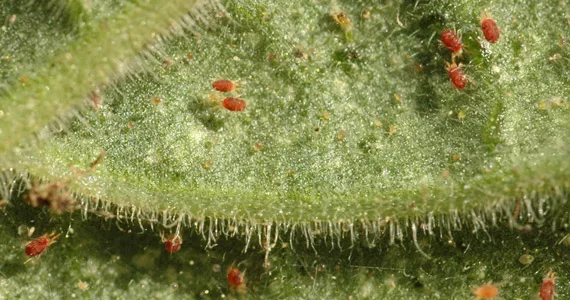
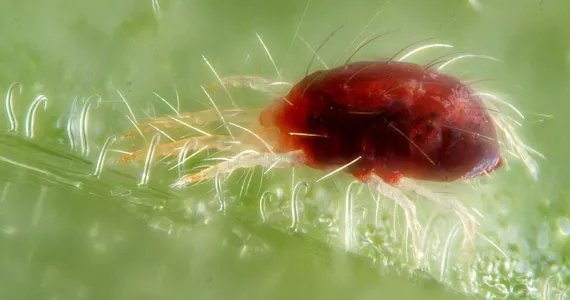
Two of the most common problematic pests from the mite family, Eriophyidae, are the spider mite and the russet mite. Spider mites are not insects and are in fact more closely related to spiders. They belong to a class called Arachnida.
What are the symptoms of mites?
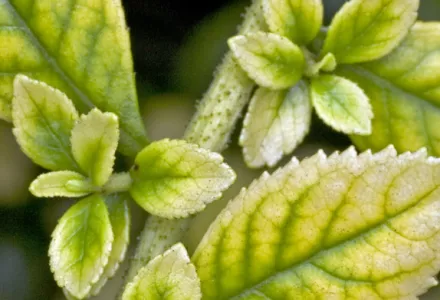
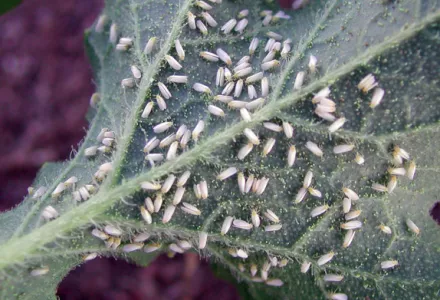
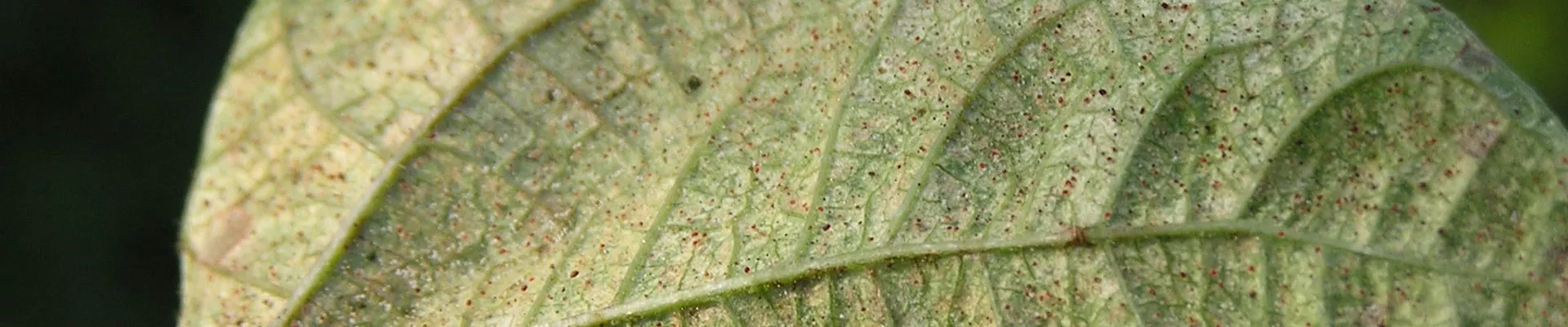
Spider mites and russet mites have needle-like sucking mouthparts that penetrate plant tissue, leaving small, yellowish or white specks of dead spots. Spots can coalesce till the leaf wilts and falls off. Spider mites also spin a silk webbing, used to move around plants.
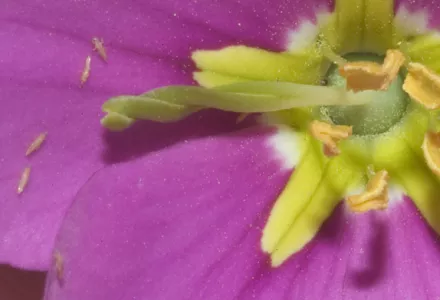
With russet mites, leaves can curl upward along the edges, become dull, brittle, and droopy. There may be stunted growth as the plants are being sapped. As an infestation grows, yellow or brown spots may appear on leaves and stems may become bronze in color. Russet mites are extremely small – much smaller than the spider mite and cannot be seen without magnification.
About mites in brief
Spider mites affect many crops worldwide. There are well over 1200 species of spider mite, of which more than a hundred can be considered as a pest, and about ten of those as a major pest. The most well-known and problematic spider mite is Tetranychus urticae (common names include two-spotted spider mite and red spider mite). Their ability to reproduce extremely rapidly enables them to cause enormous damage in a short period of time.
Russet mites can only crawl very short distances and are particularly immobile during immature stages. Adults are capable of crawling to the edges of leaves where they can be picked up and carried on air currents or by fans to quickly spread to other areas.
Biological cycle of mites
A female mite can lay about 10-20 eggs per day and 80-120 altogether during its 4-week life cycle. Eggs can be laid in silk webbing and take 3-15 days to hatch, emerging as almost colorless larvae with bright red eyes. After 4-5 days and three moltings they turn from a protonymph, deutonymph, to finally an adult. Both adults and nymphs have eight legs.
Prevention techniques
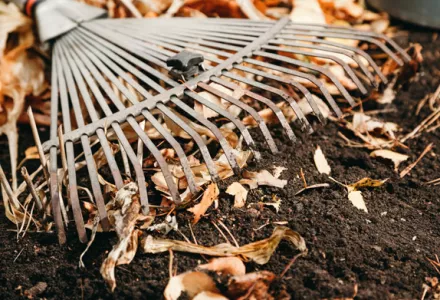
To minimize the risk and rapid spread of mite infestations, try to keep the temperature lower (<77ºF) and humidity higher (>60%), since this will slow the rate of reproduction. Higher humidity is also needed for the predators of these mites. Keep your growing areas clean and remove all leaf litter. Adequate irrigation is important, because water-stressed plants are more likely to suffer damage.
Solutions for controlling mites
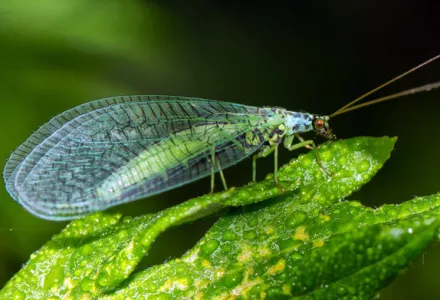
Remove the affected leaves. Spray the plant thoroughly with a horticultural oil, such as a thyme oil application, or a mixture of alcohol and soap. Repeat this treatment several times a week. CANNA CONTROL is a naturally derived, thyme oil based formula that effectively manages spider mites. With both russet mite and spider mite infestations, discard infested plants. Natural enemies such as predatory mites (Amblyseius and Neosiulus), lady beetles, and lacewings can also be introduced.