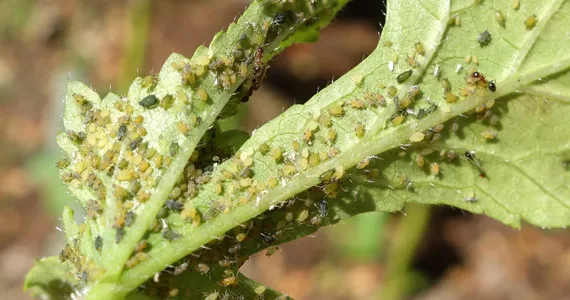
What are aphids?
When we refer to aphids, or plant lice, we usually mean a super family of insects which includes over 4,000 species of plant-specific parasites.
What are the symptoms of aphids?
Aphids use their stylus to pierce and suck on phloem sap, which can weaken the plant, causing leaves to yellow, curl, or can be a vector for introducing toxins and viruses. Root aphids may be associated with off-coloration of lower leaves. After feeding, aphids release a substance called honeydew, which can serve as an ideal culture for various fungi that can cause additional plant harm.
About aphids in brief
Aphids are no longer than about 4 mm, have a bulbous abdomen and can be many different colors. They are among the most destructive pests to affect cultivated plants in temperate regions. Winged aphids are especially dangerous for your crops, since they destroy plants much faster than regular aphids. While root aphids have historically been found on grasses (hence the name, rice root aphid) they have also been found on crops in indoor production.
Biological cycle of aphids
Females can live for 25 days, during which they can each produce up to 80 new aphids. Spring and Summer reproduction occurs asexually - without males. Aphids can be birthed with or without wings. As populations grow and space becomes limited, lack of space can trigger the birth of a winged generation.
Root aphids in particular reproduce entirely asexually; no males are produced and females give live birth to genetically identical daughter root aphids. Root aphids will also develop in winged or wingless form. There tend to be more of the wingless form and these are associated with the plant roots.
Prevention techniques
Keep the production area free from weeds that can serve as a reservoir of eggs and adults. Avoid using an excess of nitrogen fertilizer, since this can result in fleshier plants which are more attractive to aphids as a food source. Insect nets can also be used to cover crops.

Solutions for controlling aphids
Horticultural oil applications containing thyme oil can reduce aphid populations. CANNA CONTROL is a naturally-derived, thyme oil based formula that effectively manages aphids. Natural enemies that can be introduced as beneficials include lady beetles and lacewings. Green lacewing larvae (Chrysoperla sp.) are voracious predators of aphids. Entomopathogenic fungi such as Beauveria bassiana, and soil dwelling generalist predators, such as Stratiolaelaps scimitus, have also been used for root aphids.
Further reading: Aphids: Damage & Control