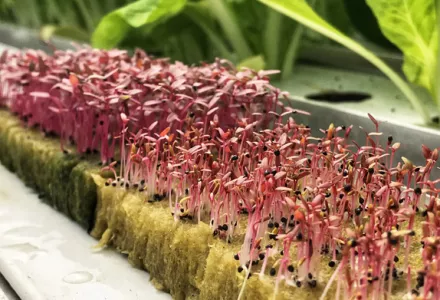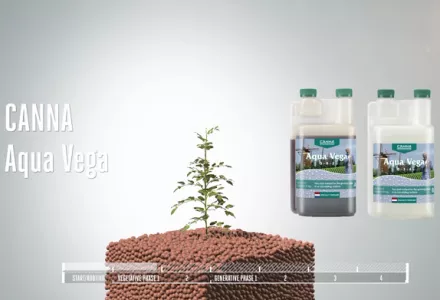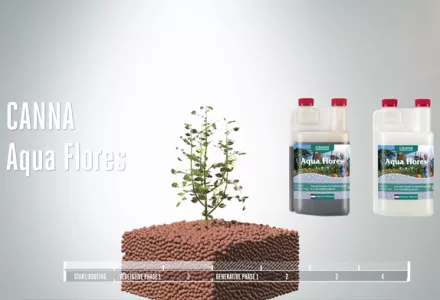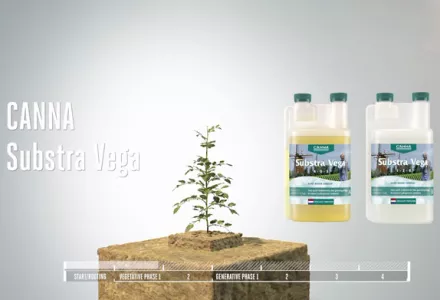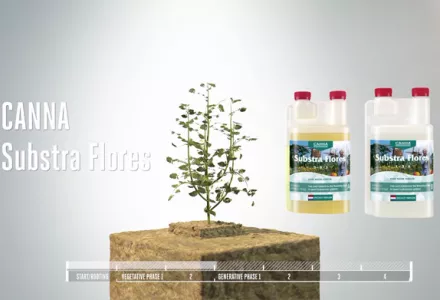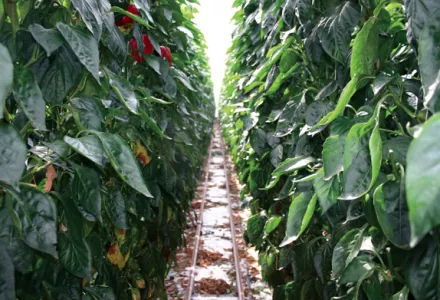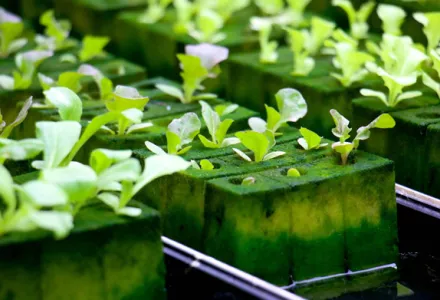

Rockwool growing medium’s clean slate is a perfect pair with CANNA’s precision nutrients: SUBSTRA and SUBSTRA HC.
Did you know that CANNA’s first fertilizer line was made for inert and substrate-free growing? It launched in 1993 then termed CANNA Vega and Flores A&B in Europe, later making its way to the USA market as CANNA SUBSTRA. Like all of CANNA’s fertilizer lines, Substra was designed to be substrate specific, to ensure that the plant received all required nutrients with minimal “fillers” or “carrier” elements like sulfates or excess potassium and iron.
What is rockwool and how is it made?
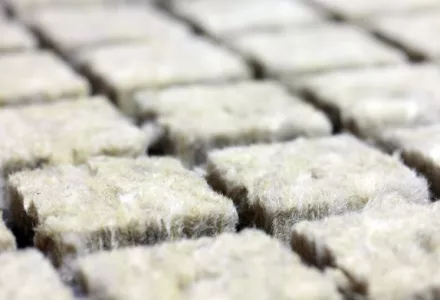
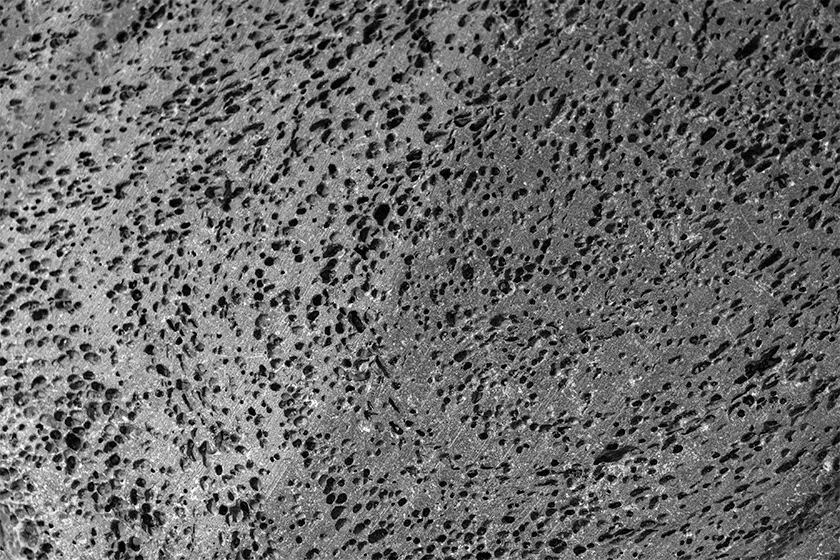
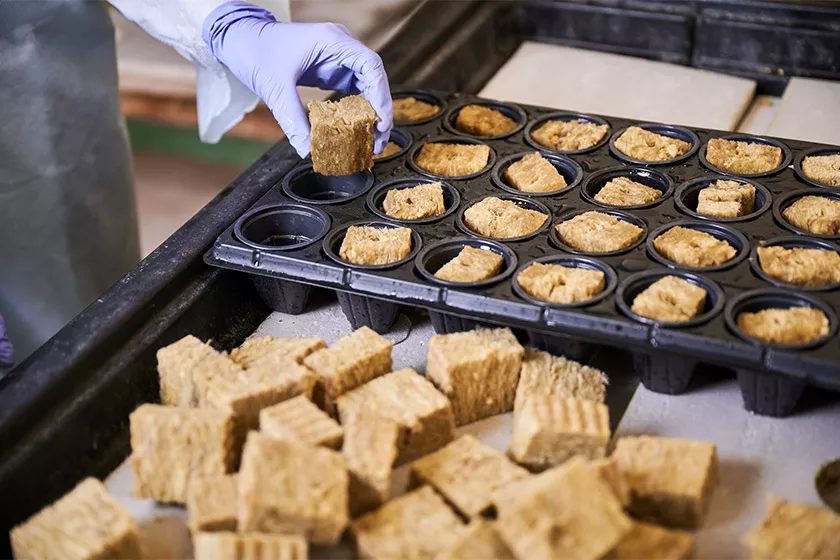
Rockwool or stone wool growing medium is made from basalt rock that is melted and spun into a fiber. It is naturally pH neutral, but becomes alkaline after processing into planting blocks, cubes, and slabs. Because of this, it requires slightly acidic buffering, before planting.
How to decide when to water rockwool growing medium?
Rockwool medium has a very high water holding capacity, with a volumetric water content (VWC) of 80%. For comparison, coco medium is also considered to have a high water holding capacity and its VWC is around 60%. Beware of the potential for overwatering. The top of a rockwool block may be deceivingly dry, whereas below is still wet. Lift slabs and cubes to feel the weight. Enzyme products, like CANNAZYM, containing cellulase, help break down naturally decaying roots and can serve as insurance in case of over-watering, generally help to keep the root zone clean, and aid in nutrient recycling.
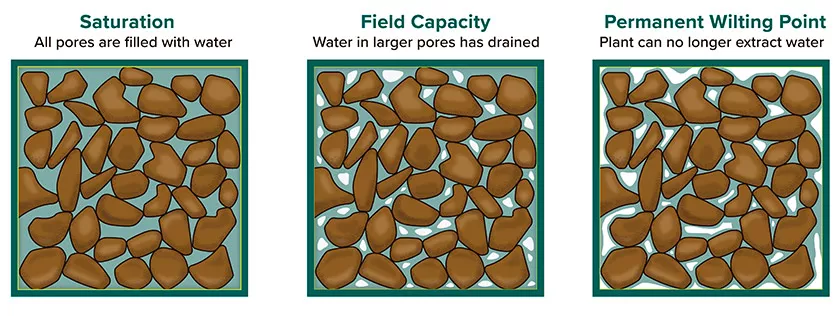
Stick with clear irrigation benchmarks. Whether using the traditional watering method of re-watering once the medium weighs about half compared to right after saturation or specific crop steering goals such as a shorter dryback for vegetative growth, mostly staying around field capacity*, or a longer dryback for generative and pushing below field capacity, establish an expected moisture content for when to re-water and take notes.
*Field capacity is the amount of water remaining in the substrate after it has been saturated and allowed to drain freely.
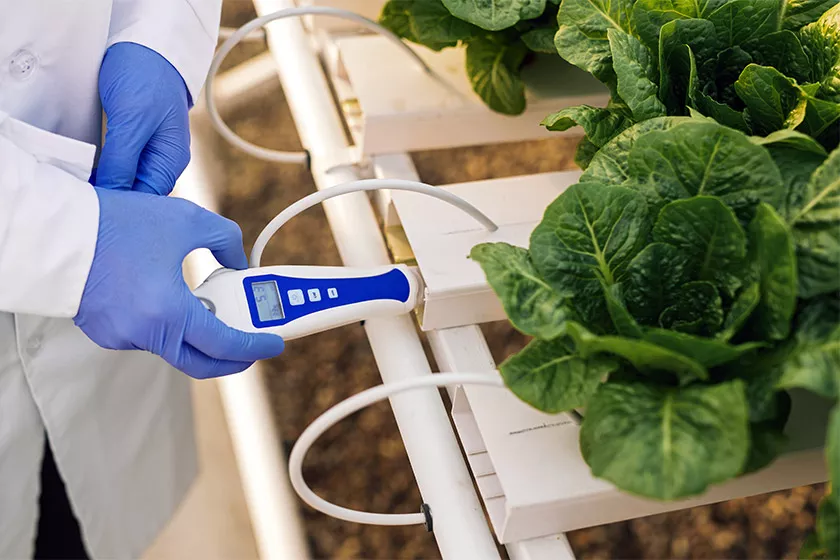
Use sensors, container weight, and/or visual cues to establish a clear rhythm. Sensor placement is generally 1 inch from the bottom, on center, for 4-6” cubes and 2” from the bottom, on center for 8” cubes. For slabs, 1” from the bottom, on center between plants.
What is the best nutrient strategy for rockwool?
Rockwool medium is considered inert, since it does not retain nor release nutrients. There is no nutritive buffer from the medium itself, like how coco medium naturally releases potassium and bonds with cations like calcium or how potting mixes act like a sponge, absorbing and slowly releasing a range of nutrients. Since the plant will obtain all of its nutrients from the fertilizer you apply and gain nothing nutritive from the rockwool itself, choose a complete fertilizer that provides the plant with all of its nutritive needs.
Flushing till at least 10% of the nutrient solution applied comes out as runoff resets the root zone with a balanced set of nutrients. Flushing also prevents salt buildup of nutrients left behind from the last watering, released by the plant, and sloughed off of plant roots. In turn, this prevents acidification and a high EC in the root zone. EC and pH stress can be a goal during generative steering, but be mindful of best timing for these conditions, such as late flower when encouraging metabolite production.
How to buffer rockwool?
Rockwool for plant production arrives alkaline (pH > 7) and needs to be buffered prior to use. Pre-treat by soaking with a mildly acidic solution with a pH around 5.5 (do not go lower than 5.1 to prevent fiber damage). Then, if transplanting developed plants, flush the rockwool in a nutrient solution appropriate for the plant’s growth phase and similar to what the plant has already been receiving (EC 1.5-2.7 mS/cm, pH 5.5-6.2). During transplant, kelp applications, like CANNA RHIZOTONIC, can help reduce transplant shock, helping plants continue to stay productive without missing a beat.
If starting with cuttings or seeds, growers have the option of only using the pH’d plain water from the pre-treatment soak and waiting to apply a nutrient solution once root initials have formed or, setting the rockwool plugs with a light nutrient solution using CANNA Start, to obtain an EC around 1.5. Once root initials have formed, it is an ideal timing for an application of RHIZOTONIC, containing kelp which improves conditions for root growth.
Rockwool growing medium and pH drift
Rockwool growing medium can naturally draw the pH upwards due to its alkaline composition. Monitor and manage pH through flushing with prepared solution and adjusting the pH of the nutrient solution as needed. The general pH range recommended for nutrient solution in inert mediums is 5.5-6.2.
Use pH adjusters carefully, using precise dosing. Be aware that pH down products with strong acids like nitric acid or sulfuric acid or pH up products with strong bases like potassium hydroxide need to be dosed precisely in order to avoid precipitates, nutrient antagonisms, or excess nutrient application from the pH adjuster itself. If needed, consider pre-adjusting the water supply or diluting the pH adjuster prior to injection into the nutrient solution.
Questions? Look to CANNA support
With each production cycle, management becomes more refined for your specific cultivation but don’t feel alone along the way. CANNA’s technical advisors, backed by our in-house and third party researchers, are available to answer questions as they come up. With CANNA, there’s one less thing to worry about.
FAQ
Rockwool growing medium is made from basalt rock that is melted and spun into a fiber.
Rockwool is naturally pH neutral, but becomes alkaline after processing into planting blocks. Because of this, it requires slightly acidic buffering, before planting.
Rockwool for plant production arrives alkaline (pH > 7) and needs to be buffered prior to use. Pre-treat by soaking with a mildly acidic solution with a pH around 5.5 (do not go lower than 5.1 to prevent fiber damage). Then, if transplanting developed plants, flush the rockwool in a nutrient solution appropriate for the plant’s growth phase and similar to what the plant has already been receiving (EC 1.5-2.7 mS/cm, pH 5.5-6.2). During transplant, kelp applications, like CANNA RHIZOTONIC, can help reduce transplant shock, helping plants continue to stay productive without missing a beat.
If starting with cuttings or seeds, growers have the option of only using the ph’d plain water from the pre-treatment soak and waiting to apply a nutrient solution once root initials have formed or, setting the rockwool plugs with a light nutrient solution using CANNA Start, to obtain an EC around 1.5. Once root initials have formed, it is an ideal timing for an application of RHIZOTONIC, containing kelp which improves conditions for root growth.
Rockwool medium has a very high water holding capacity, with a volumetric water content (VWC) of 80%. This means that once the medium has reached field capacity (has been fully saturated and then excess water is allowed to drain away), about 80% of your rockwool medium consists of rockwool itself and the remaining 20% is air space.
Watering frequency depends on rockwool size, irrigation goals, and environmental conditions (temperature, humidity, ventilation), so unfortunately there is no one size fits all type of answer.
Determine what your irrigation goals are and then stick with clear benchmarks. This could look like re-watering once the medium weighs about half compared to right after saturation, following a traditional watering method. Or, watering goals may vary depending on steering goals such such as a shorter dryback for vegetative growth, mostly staying around field capacity*, or a longer dryback for generative and pushing below field capacity.
*Field capacity is the amount of water remaining in the substrate after it has been saturated and allowed to drain freely.
Use sensors, container weight, and/or visual cues to establish a clear rhythm. Sensor placement is generally 1 inch from the bottom, on center, for 4-6” cubes and 2” from the bottom, on center for 8” cubes. For slabs, 1” from the bottom, on center between plants.
No, rockwool medium is considered inert, so it does not retain nor release nutrients.
Rockwool medium is considered inert, since it does not retain nor release nutrients. There is no nutritive buffer from the medium itself. Since the plant will obtain all of its nutrients from the fertilizer you apply and gain nothing nutritive from the rockwool itself, choose a complete fertilizer that provides the plant with all of its nutritive needs.
Flushing till at least 10% of the nutrient solution applied comes out as runoff resets the root zone with a balanced set of nutrients. Flushing also prevents salt buildup of nutrients left behind from the last watering, released by the plant, and sloughed off of plant roots. In turn, this prevents acidification and a high EC in the root zone. EC and pH stress can be a goal during generative steering, but be mindful of best timing for these conditions, such as late flower when encouraging metabolite production.
Rockwool growing medium can naturally draw the pH upwards due to its alkaline composition. Monitor and manage pH through flushing with prepared solution and adjusting the pH of the nutrient solution as needed. The general pH range recommended for nutrient solution in inert mediums is 5.5-6.2.
Beware of the potential for overwatering. The top of a rockwool block may be deceivingly dry, whereas below is still wet. Lift slabs and cubes to feel the weight and use accurate sensor technology, if applicable.
Rockwool slabs can be buffered in their original wrapper. Make incisions only for filling the bag and once buffered, make drainage cuts.
Rockwool medium is considered inert, since it does not retain nor release nutrients. For this reason, it’s critical to choose a complete fertilizer that provides the plant with all of its nutritive needs. Precision nutrients, offering a compact package and avoiding “filler” nutrients, can help maintain a relatively low EC application rate, which in turn, helps prevent root damage due to salt build up and acidification in the root zone.